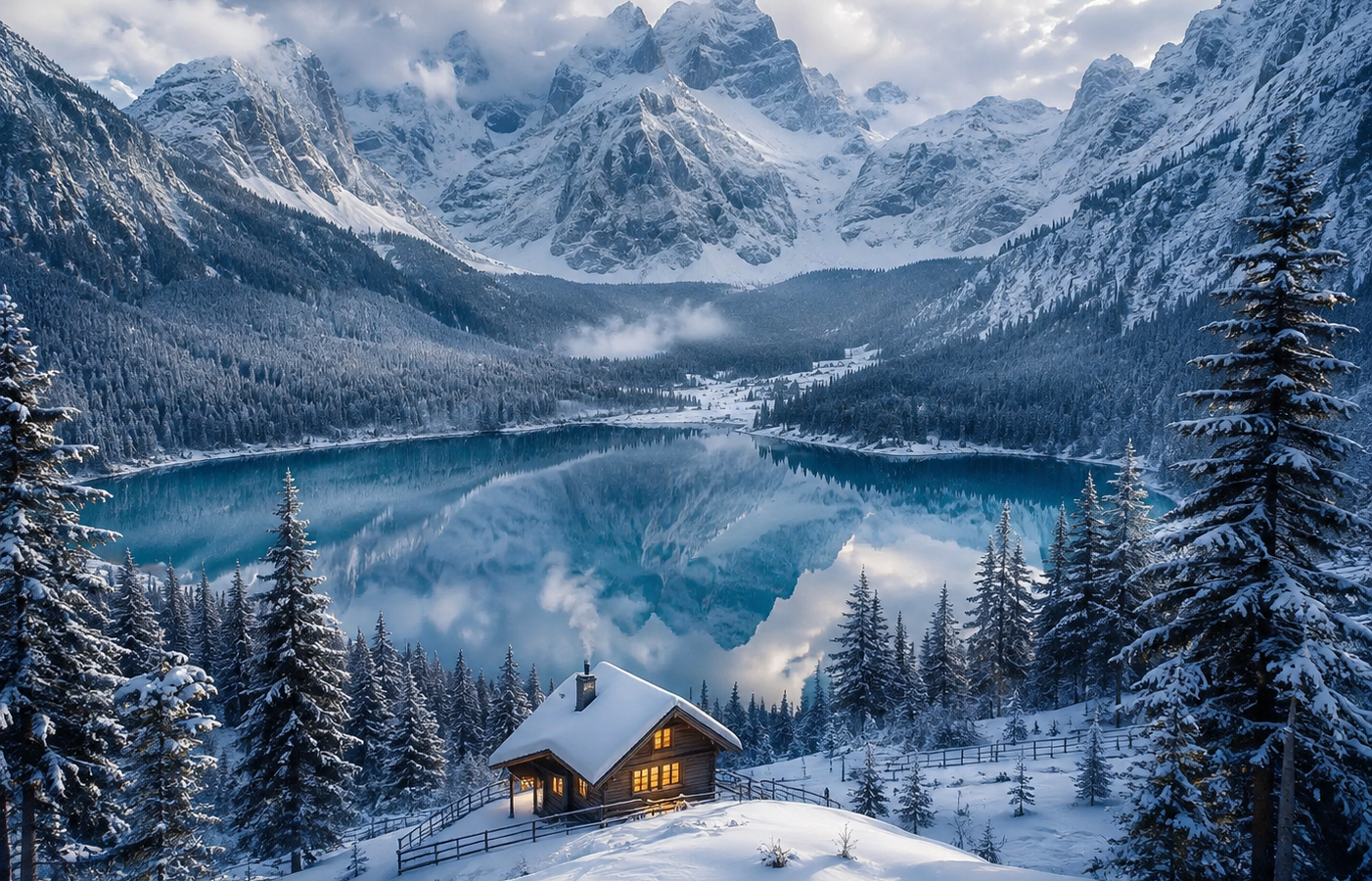
The Ultimate Personal Journey: Unforgettable Things to Do in Banff
Traveling to the Canadian Rockies is a dream for many outdoor enthusiasts. Consequently, finding the right things to do in Banff can quickly feel overwhelming when you are planning your itinerary. When I first planned my trip, I was bombarded by the sheer volume of generic travel guides. Therefore, I decided to map out a truly personal journey. Furthermore, I wanted to experience this mountain paradise authentically, rather than simply checking tourist traps off a list.
If you are searching for the best things to do in Banff, you have certainly come to the right place. In this comprehensive, firsthand guide, I am going to share my personal journey through this majestic national park. Specifically, I will walk you through the turquoise lakes, the rugged mountain trails, and the quiet moments watching wildlife at dawn.
Whether you are an experienced hiker or a casual road-trip enthusiast, choosing the right things to do in Banff will ultimately define your vacation. Let me share my experiences, complete with practical tables, curated lists, and expert tips to help you plan the ultimate Canadian adventure.
My Arrival in the Heart of the Canadian Rockies
The drive from Calgary International Airport to the town of Banff takes about ninety minutes. However, for me, it felt like a magical transition into an entirely different world. As the flat plains of Alberta slowly gave way to the towering, jagged peaks of the Rocky Mountains, my anticipation grew exponentially. The highway winds through the breathtaking Bow Valley. Subsequently, before you even reach the park gates, the landscape completely transforms into a dramatic alpine wonderland.
My main goal for this trip was remarkably simple. I wanted to uncover the most authentic things to do in Banff while avoiding the heaviest crowds. I wanted to see the famous sights, but I also wanted to find the quiet corners of the park that standard travel brochures often overlook. Early on, I learned that relying on official resources, like Parks Canada, is absolutely essential for checking trail conditions and securing park passes.
As a traveler who is constantly seeking unique landscapes—much like my unforgettable trip exploring the striking green sand beach on the Big Island—I knew this destination would be special. Naturally, Banff’s glacial terrain offered a completely different, yet equally mesmerizing, natural wonder that I was eager to explore.
1. Witnessing the Magic of the Iconic Glacial Lakes
When most people research things to do in Banff, the first images that usually appear are brilliantly blue lakes surrounded by towering mountains. Seeing these spectacular bodies of water in person was undeniably my top priority.
Lake Louise: The Crown Jewel
I woke up at 5:00 AM on my first full day in the park. The primary goal was to reach Lake Louise before the heavy tourist crowds arrived. Arriving early is undoubtedly one of the most crucial pieces of advice I can offer any visitor. As I walked from the parking lot toward the water, the dense pine trees parted to reveal a view that literally stopped me in my tracks.
The water of Lake Louise is a striking, milky turquoise. Interestingly, this color is created by “rock flour” carried into the lake by meltwater from the Victoria Glacier. I stood on the shoreline for over an hour. Meanwhile, I just watched the morning light slowly illuminate the massive glacier in the distance.
Instead of simply taking a quick photograph and leaving, I highly recommend renting a canoe. Paddling on Lake Louise allowed me to escape the noisy crowds on the shoreline. As a result, I could experience the massive scale of the surrounding mountains directly from the center of the serene water.
Moraine Lake: The Valley of the Ten Peaks
If Lake Louise is the crown jewel, Moraine Lake is certainly the hidden diamond of the region. Located just a short drive away, this body of water is situated in the awe-inspiring Valley of the Ten Peaks. For this excursion, I took the official park shuttle. Ultimately, this proved to be a very efficient and environmentally friendly way to travel.
When I climbed the Rockpile trail—a short, accessible walk near the lake—the view that unfolded was simply staggering. The water here features an even deeper, more vibrant shade of blue than Lake Louise. Furthermore, the ten snow-capped peaks form a dramatic, imposing wall directly behind the lake. Sitting on a large boulder, drinking a cup of hot coffee, and staring at this view remains one of the absolute best things to do in Banff in my memory.
Comparing the Lakes: A Quick Guide
To help you decide how to allocate your precious time, I created this comparative table based on my personal experiences.
| Feature | Lake Louise | Moraine Lake |
| Water Color | Milky turquoise | Deep, vibrant sapphire blue |
| Best Time to Visit | Early morning (before 8 AM) | Sunrise (truly spectacular) |
| Crowd Level | Very high throughout the day | High, but managed via shuttle access |
| Top Activity | Canoeing to the glacier base | Climbing the Rockpile Trail |
| Accessibility | Open year-round | Road closed in winter (mid-Oct to late May) |
2. Exploring the Town of Banff and Local Attractions
After spending significant time in the rugged wilderness, I dedicated a full day to exploring the townsite. The town of Banff is nestled directly inside the national park boundaries. Consequently, it offers a unique blend of mountain culture, excellent dining, and fascinating local history.
Strolling Down Banff Avenue
Walking down Banff Avenue is an incredible experience in itself. The vibrant street is lined with heritage buildings, high-end outdoor gear shops, and cozy cafes. However, the best part is undeniably the view. Cascade Mountain looms massively at the end of the avenue, creating a picture-perfect backdrop. I spent a few leisurely hours buying souvenirs, chatting with friendly locals, and eating at a wonderful local bakery.
The Banff Gondola: Views from the Sky
If you truly want to understand the geography of the Bow Valley, taking the Banff Gondola up Sulphur Mountain is an absolute must. This attraction was consistently listed among the most highly recommended things to do in Banff. Fortunately, it did not disappoint me in the slightest.
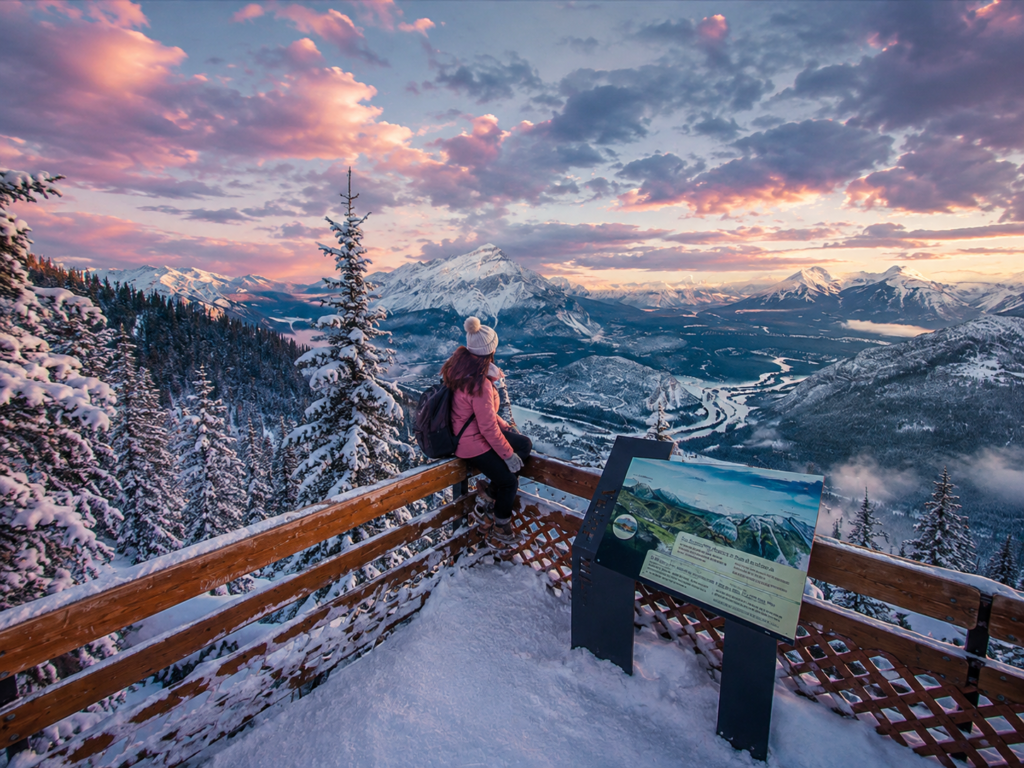
The scenic eight-minute ride took me up to an elevation of nearly 7,500 feet. At the summit, visitors will find a state-of-the-art observation deck. Additionally, a beautiful wooden boardwalk leads directly to the cosmic ray station at Sanson’s Peak. Standing at the top, I enjoyed a breathtaking 360-degree view of six distinct mountain ranges. For planning purposes, I highly recommend visiting official tourism sites like Banff & Lake Louise Tourism to book your tickets in advance.
Cave and Basin National Historic Site
In addition to the gondola, I decided to dive into the history of the park. The Cave and Basin National Historic Site is where the entire Canadian National Park system began. I walked through the dimly lit cave to see the original thermal springs. Surprisingly, the smell of sulfur is quite strong, but the historical significance makes it well worth a visit.
Soaking in the Banff Upper Hot Springs
After a long day of walking and historical exploration, my leg muscles were aching. Just a short distance from the gondola terminal, the Banff Upper Hot Springs await tired travelers. These natural thermal waters were discovered in the 1880s. Historically, they were actually the primary catalyst for the creation of Canada’s first national park.
Sitting in the hot, mineral-rich water while looking out at Mount Rundle was incredibly therapeutic. Therefore, this historical and relaxing experience firmly belongs on any list of top things to do in Banff.
3. The Ultimate Road Trip: Driving the Icefields Parkway
You cannot realistically talk about the best things to do in Banff without prominently mentioning the Icefields Parkway (Highway 93). This legendary 232-kilometer stretch of road connects Banff National Park to Jasper National Park. Indeed, it is widely considered one of the most scenic drives in the entire world. I dedicated a full, uninterrupted day to this journey. Without a doubt, it was a major highlight of my trip.
Bow Lake and Peyto Lake
My very first major stop on the parkway was the stunning Bow Lake. The water was completely still that morning. Consequently, it acted like a giant mirror reflecting the surrounding mountains and the impressive Crowfoot Glacier. The atmosphere there was incredibly peaceful.
A bit further up the winding road is the popular turnoff for Peyto Lake. The hike from the parking lot to the viewpoint is slightly steep but relatively short. Because the viewing platform is located at a high elevation, you look down upon the lake. Interestingly, Peyto Lake is shaped brilliantly like a wolf’s head. The brilliant, almost neon blue color of the water here simply defies logic.
The Columbia Icefield
As I drove further north along the parkway, the landscape became progressively more rugged and icy. The ultimate culmination of this scenic drive is the massive Columbia Icefield. This area represents the largest ice field in the Rocky Mountains.
To experience it fully, I booked a guided tour on an Ice Explorer. This massive, all-terrain vehicle actually drove our group directly onto the Athabasca Glacier. Stepping out onto glacial ice that is thousands of years old is a deeply humbling experience. Moreover, drinking the pure, freezing meltwater directly from a glacial stream is something I will never forget.
Icefields Parkway Driving Tips
If you plan to include this magnificent drive in your itinerary of things to do in Banff, keep these personal tips in mind:
- Fill your gas tank early: There is only one gas station on the entire parkway, located at Saskatchewan River Crossing. Unfortunately, the fuel there is exceptionally expensive.
- Pack sufficient food and water: Dining options along the route are severely limited. I proactively packed a cooler with sandwiches and fresh fruit from a grocery store in Banff.
- Download offline maps: There is absolutely no reliable cell service anywhere on the Icefields Parkway.
- Start your journey early: To avoid slow-moving RV traffic and have the viewpoints mostly to yourself, try to be on the road by 7:00 AM.
4. Hiking the Canadian Rockies: Trails for Every Level
For me personally, the most rewarding things to do in Banff always involve lacing up my sturdy hiking boots. The park boasts hundreds of miles of well-maintained trails. These paths range from paved, fully accessible walkways to intense multi-day alpine treks. Below are the specific trails I personally experienced and highly recommend to anyone.
List of Must-Do Hikes in Banff
- Johnston Canyon (Easy to Moderate):This trail is one of the most heavily trafficked paths in the park, and for very good reason. The hike consists of a series of suspended catwalks built directly into the limestone walls of the canyon. I intentionally hiked this early in the morning to beat the crowds. Walking directly above the rushing, roaring blue water of the creek felt like exploring a secret, underground world.
- Tunnel Mountain (Moderate):Despite its rather misleading name, there is no actual tunnel in this mountain. Located right in the heart of the town, this hike is relatively short. However, it features a steady, heart-pumping incline. It took me roughly an hour and a half to reach the summit. The ultimate reward is a beautiful, panoramic view of the town site, the winding Bow River, and the picturesque golf course.
- Plain of Six Glaciers (Challenging):This epic trail begins at the shores of Lake Louise. From there, it takes you deep into the mountains, past the lake, and up toward the massive glaciers. The hike is quite long and certainly requires a decent level of physical fitness. Nevertheless, the scenery becomes significantly more dramatic with every single step. The primary highlight for me was reaching the historic Plain of Six Glaciers Teahouse near the top. Sitting at a rustic wooden table in the alpine wilderness, drinking hot tea, was an unforgettable reward.
- Sunshine Meadows (Moderate):For this adventure, I took a shuttle bus up to the Sunshine Village ski resort. During the summer months, this area transforms into a spectacular hiking paradise. The meadows sit at a very high alpine elevation. Walking through endless fields of blooming wildflowers, with unobstructed views of the surrounding peaks, literally felt like walking through a landscape painting.
5. Wildlife Encounters and Park Safety
One of the most thrilling and unpredictable things to do in Banff is wildlife spotting. The Canadian Rockies are naturally home to grizzly bears, black bears, elk, moose, bighorn sheep, and elusive wolves. During my week-long trip, I was exceptionally fortunate enough to see several of these magnificent animals in their natural habitat.
My Personal Wildlife Experiences
While driving along the quiet Bow Valley Parkway (Highway 1A), I spotted a large male elk. This massive creature, boasting enormous antlers, was resting peacefully in the tall grass. It was a spectacular sight. Later that same week, while driving back from Lake Louise, traffic suddenly slowed to a crawl. Up ahead, grazing lazily on dandelions by the side of the road, was a beautiful black bear.
Respecting the Animals
While seeing wildlife is an amazing part of any Banff itinerary, prioritizing safety is critical. These are unpredictable wild creatures, not petting zoo attractions. Based on strict guidelines from park authorities, here is how you should conduct yourself:
- Keep a safe distance: Always maintain at least 100 meters (330 feet) from bears, wolves, and cougars. Similarly, stay at least 30 meters (100 feet) away from elk, deer, and bighorn sheep.
- Carry bear spray everywhere: I rented a canister of bear spray in town and immediately learned how to use it. If you are hiking in this region, this tool is a non-negotiable safety requirement.
- Travel in groups whenever possible: Make plenty of noise while hiking to avoid surprising a bear. For instance, I attached a small, jingling bell to my backpack. Furthermore, I regularly called out loudly while walking through dense brush.
- Never feed any wildlife: Feeding wild animals is highly dangerous and strictly illegal. Unfortunately, it teaches them to associate humans with food. Consequently, this usually results in the animal having to be euthanized by park rangers for public safety.
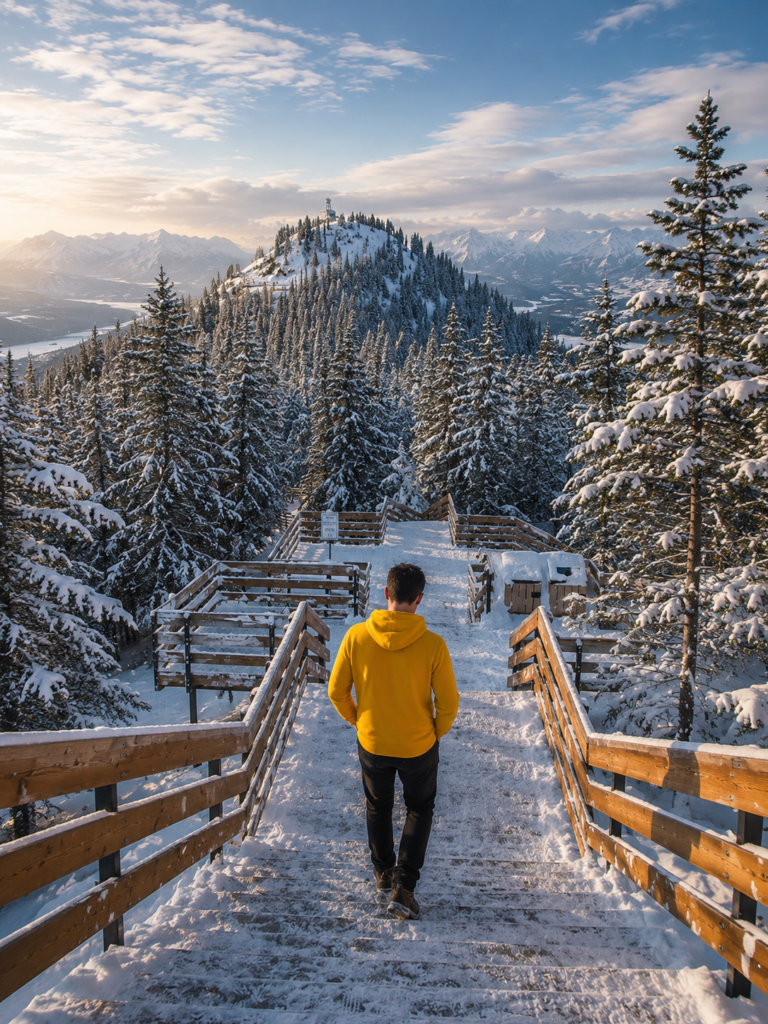
6. Seasonal Guide: Winter vs. Summer in Banff
When you are deciding on the best things to do in Banff, the specific time of year you visit will completely dictate your experience. I chose to visit during the late summer. However, I spoke with many passionate locals who insisted that winter is the true magic season of the Rockies. Here is a detailed breakdown of what to expect during different seasons.
Summer (June to August)
Summer is undeniably the most popular time to visit the park. The glacial lakes are completely thawed and vividly display their famous blue colors. Additionally, all hiking trails and scenic drives, including the road to Moraine Lake, are fully open. The weather is generally warm and pleasant during the day. However, it can still be quite chilly at night.
- Pros: Access to all locations, excellent hiking conditions, vibrant lake colors.
- Cons: Extremely heavy tourist crowds, expensive accommodation rates, and the need to book everything months in advance.
Winter (December to March)
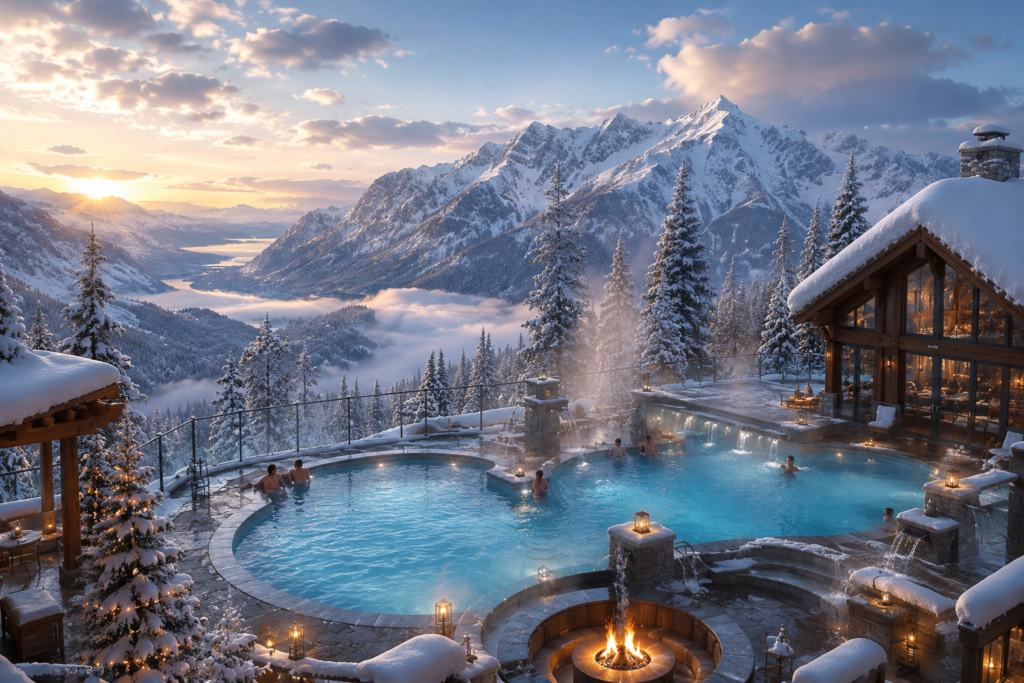
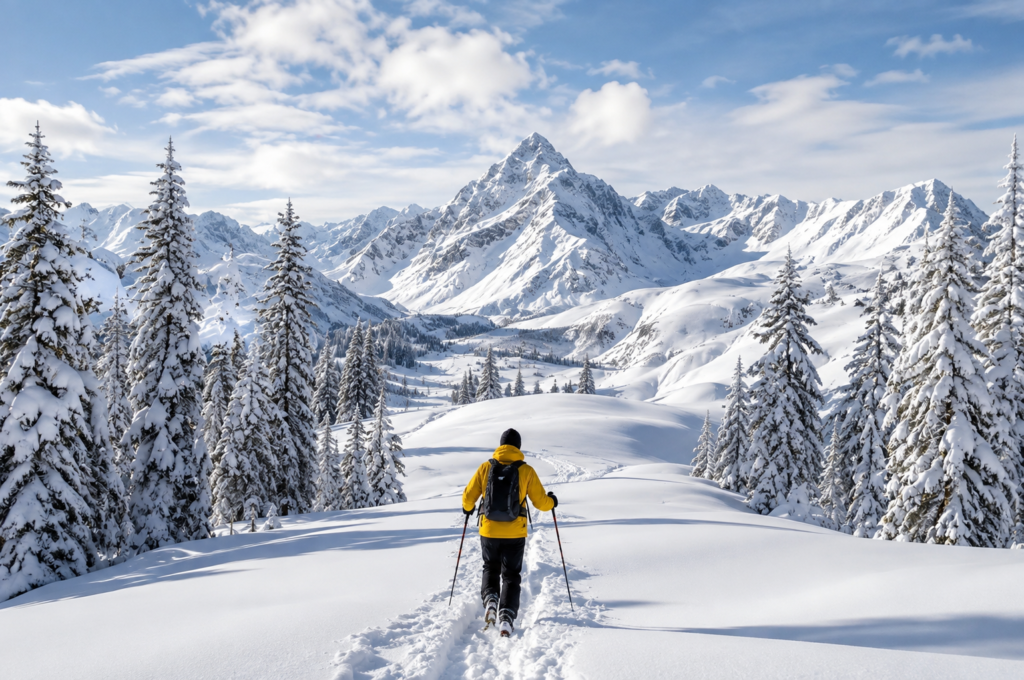
In the harsh winter months, Banff dramatically transforms into a snowy wonderland. The famous lakes freeze solid. Consequently, hiking boots are quickly replaced by skis, snowboards, and ice cleats.
- Top Winter Things to Do in Banff:
- Skiing at the famous “Big 3” resorts (Banff Sunshine, Lake Louise, and Mt. Norquay).
- Ice skating directly on the frozen surface of the iconic Lake Louise.
- Taking a thrilling dog sledding tour through the snow-covered valleys.
- Doing an adventurous ice walk through Johnston Canyon, where the roaring waterfalls freeze into massive, beautiful ice pillars.
- Pros: Stunning snowy landscapes, world-class winter sports, significantly fewer crowds.
- Cons: Extreme cold temperatures, while some roads and attractions are closed due to severe avalanche risks.
7. Where to Eat: Culinary Experiences in the Mountains
After several days filled with exhausting outdoor adventures, finding great food became a high priority. Surprisingly, the culinary scene here is incredibly diverse for a relatively small mountain town.
First and foremost, I highly recommend trying local Canadian specialties. I had an incredible, savory dinner at a local steakhouse. There, I finally tried authentic Alberta beef, which is famous worldwide for its superior quality. On another evening, I visited a cozy, bustling pub on Banff Avenue. Specifically, I ordered a traditional Canadian Poutine—a heavy, comforting dish consisting of crispy french fries, fresh cheese curds, and piping hot brown gravy. Ultimately, it was exactly the kind of calorie-dense food my body desperately needed after a ten-mile hike.
For breakfast, I suggest you skip the standard hotel buffet. Instead, visit one of the many independent local bakeries. Grabbing a fresh artisan pastry and a strong, dark roast coffee before heading out to the trails quickly became my absolute favorite morning ritual.
8. Where to Stay: Choosing Your Basecamp
Deciding where to sleep is just as important as deciding what things to do in Banff. The region essentially offers three main hubs for travelers. Therefore, I carefully researched all of them before booking my trip.
Banff Townsite
Staying right in the town of Banff is incredibly convenient. You have immediate walking access to dozens of restaurants, shops, and grocery stores. However, this convenience comes at a premium price. The hotels here are often fully booked and quite expensive during the summer months.
Lake Louise Village
If your primary goal is to hike the glaciers and see the major lakes, staying in Lake Louise Village is a strategic move. It puts you much closer to the Icefields Parkway. On the other hand, the dining options are much more limited, and the village lacks the vibrant nightlife of Banff town.
Canmore (The Budget-Friendly Alternative)
Although it is technically located just outside the national park gates, Canmore is a fantastic alternative. I actually spent two nights here to save some money. The town is highly scenic, slightly less crowded, and significantly cheaper. Consequently, it is an excellent choice for budget-conscious travelers who don’t mind a brief 20-minute commute into the park each morning.
9. Practical Planning: My Personal Packing Guide
To ensure you can comfortably enjoy all the things to do in Banff, packing correctly is absolutely vital. The weather in the mountains is notoriously unpredictable. During my specific trip in August, I experienced bright sunshine, heavy rain, and even a light snow flurry at high elevations. Amazingly, all of this occurred within the exact same week.
The ultimate secret to comfort in the Rockies is strategic layering. Here is a practical, detailed table of essential items I packed and utilized daily:
| Item Category | Specific Items I Packed | Why It Is Essential |
| Base Layers | Moisture-wicking t-shirts, thermal underwear | Keeps freezing sweat away from the body during intense hikes. |
| Insulating Layers | Fleece jacket, lightweight down puffer jacket | Mountain mornings and evenings are very cold, even in mid-summer. |
| Outerwear | Waterproof and windproof Gore-Tex rain shell | Weather changes rapidly; you must stay dry to avoid hypothermia. |
| Footwear | Waterproof hiking boots, comfortable walking shoes | Essential for muddy, uneven trails and walking around the paved town. |
| Accessories | UV-blocking sunglasses, wide-brimmed hat, light gloves | UV rays are much stronger at high altitudes; early mornings require gloves. |
| Safety Gear | 20L Daypack, reusable water bottle, bear spray | Strictly necessary for carrying vital supplies and staying safe on remote trails. |
10. Photography Tips for Banff
If you are anything like me, capturing the intense beauty of this place is one of the most important things to do in Banff. The natural landscapes are so dramatic that taking a bad photo is genuinely difficult. However, capturing a truly great professional photo requires a bit of thoughtful planning.
First and foremost, lighting is absolutely everything. The harsh midday sun can easily wash out the delicate colors of the glacial lakes. Furthermore, it creates very harsh, unflattering shadows on the mountain faces. I quickly found that the best times for landscape photography were the “golden hours.” Specifically, this is the magical hour just after sunrise and the fading hour just before sunset.
When photographing Lake Louise and Moraine Lake, purchasing a polarizing filter for your camera or smartphone is a brilliant investment. This tiny piece of glass helps cut through the harsh glare on the surface of the water. As a result, it allows the true, deep colors of the glacial rock flour to shine vibrantly through in your pictures.
Additionally, always remember to include a sense of scale. The mountains are so massive that it is often hard to convey their true size in a standard photograph. Therefore, I purposefully tried to include a tiny canoe, a distant cabin, or a person in my wide landscape shots. Ultimately, this gives viewers a realistic sense of how enormous the environment truly is.
11. Side Trip: Exploring Yoho National Park
While compiling your list of things to do in Banff, you should seriously consider crossing the provincial border into British Columbia. Just a short drive away lies Yoho National Park. Although it is smaller than Banff, it is equally stunning and generally less crowded.
I took a half-day trip to visit Emerald Lake. True to its name, the water here is a vivid, breathtaking shade of green. Furthermore, I drove up a steep, winding mountain road to witness Takakkaw Falls. This is one of the highest waterfalls in all of Canada. Standing at the base and feeling the freezing mist on my face was incredibly refreshing. Because Yoho is so close, it seamlessly integrates into any Banff itinerary.
12. Building Your Perfect Banff Itinerary
Based on my comprehensive journey, figuring out how to logically sequence the various things to do in Banff is crucial. Proper planning helps you avoid extreme exhaustion and maximizes your overall enjoyment. I strongly suggest dedicating a minimum of five full days to exploring the park.
Here is a general, step-by-step framework based on how I successfully structured my own trip:
- Day 1: Arrival and Acclimation. Check into your accommodation, explore Banff Avenue, ride the Banff Gondola, and finally, relax your muscles at the Upper Hot Springs.
- Day 2: The Iconic Glacial Lakes. Wake up very early to visit Lake Louise. Next, hike the steep trail to the Lake Agnes Tea House. In the afternoon, take the shuttle to Moraine Lake and climb the famous Rockpile.
- Day 3: The Epic Parkway Road Trip. Dedicate the entire day to driving the scenic Icefields Parkway. Make sure to stop at Bow Lake, hike up to Peyto Lake, and take a guided tour of the massive Columbia Icefield.
- Day 4: Deep Nature Immersion. Hike the suspended walkways of Johnston Canyon in the early morning. In the afternoon, drive slowly along the Bow Valley Parkway to look for wildlife, stopping frequently at scenic pullouts.
- Day 5: High Alpine Views. Take the convenient shuttle to Sunshine Meadows for a full day of high-altitude hiking among blooming wildflowers. Alternatively, hike Tunnel Mountain for one final, sweeping view over the town before departing for the airport.
Final Thoughts on My Banff Experience
Looking back fondly on my trip, simply checking off a rigid list of things to do in Banff was only a small part of the total experience. The true, lasting value of visiting the Canadian Rockies lies in the quiet, reflective moments. For instance, it is the profound feeling of absolute insignificance when standing at the base of a massive, ancient glacier. Likewise, it is the sharp, beautifully clean smell of the pine forest immediately after a heavy afternoon rainstorm. Above all, it is the deep sense of peace that naturally comes from disconnecting from our chaotic digital world and immersing yourself completely in raw nature.
Whether you are actively seeking high-adrenaline outdoor adventures, serene landscapes to photograph, or just a quiet mountain town to relax in, Banff absolutely delivers on every front. It is a place that challenges you physically if you want it to. However, it also has the rare power to heal you mentally.
As you carefully plan your own personal journey, use this extensive guide not as a strict rulebook, but as a flexible foundation. Make sure to book your tickets through reliable sources, respect the dangerous wildlife, hike safely, and always leave no trace behind. The list of things to do in Banff is practically endless. Ultimately, the unique memories you create will be entirely yours. Safe travels, and make sure to enjoy every single moment in the beautiful heart of the Canadian Rockies.