Falkland Palace Scotland: A Complete Travel Guide to History, Gardens, Royal Tennis & Outlander
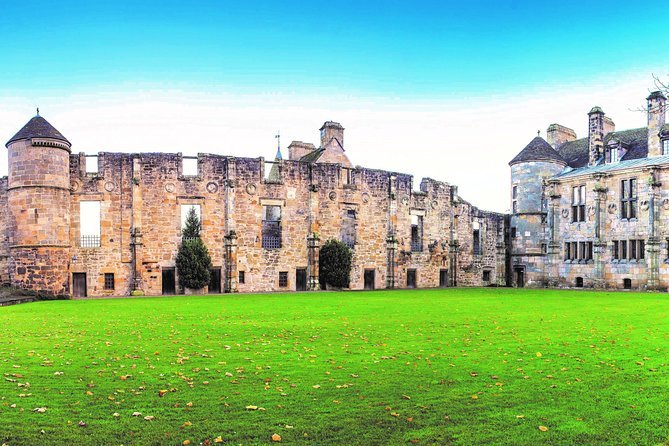
If you are looking for a place in Scotland where royal history, Renaissance architecture, beautiful gardens, quiet village streets, and fascinating stories come together, Falkland Palace deserves a place on your travel itinerary.
Located in the historic village of Falkland in Fife, Falkland Palace Scotland was once a favourite country retreat of the Scottish royal family. The palace is closely connected with the Stuart dynasty and is particularly famous for its association with Mary, Queen of Scots. Today, visitors can explore the palace, gardens, Chapel Royal, historic rooms, orchard, wildflower areas, and one of the world’s most remarkable surviving real tennis courts.
Falkland is also well known among television fans because the village appeared as Inverness in the popular Outlander series. The connection adds another layer to the experience, but you do not need to be an Outlander fan to appreciate the palace. Its architecture, royal history, gardens, and atmosphere make it an interesting destination in its own right.
The palace was developed during the reigns of James IV and James V, with major work taking place between 1501 and 1541. The National Trust for Scotland describes it as one of Scotland’s finest Renaissance palaces.
If you are planning a trip to Fife, this guide explains what makes Falkland Palace special, what you can see, its connection with Mary, Queen of Scots, the famous royal tennis court, Outlander filming locations, visiting information, family travel ideas, and how to build Falkland into a wider Scotland itinerary.
Quick Facts About Falkland Palace Scotland
| Feature | Details |
|---|---|
| Location | Falkland, Fife, Scotland |
| Country | Scotland, United Kingdom |
| Main historical period | Early 16th century |
| Major royal connections | James IV, James V, Mary, Queen of Scots and the Stuart dynasty |
| Architectural style | Renaissance |
| Famous feature | Historic real tennis court |
| Film connection | Outlander |
| Current care | National Trust for Scotland |
| Nearby places | Cupar, Kirkcaldy, St Andrews and other Fife attractions |
| Best for | History, architecture, gardens, photography, families and Outlander fans |
| Palace address | Falkland Palace, Falkland, Cupar, Fife, KY15 7BY |
The palace is located in the village of Falkland, around 11 miles north of Kirkcaldy and 11 miles south-west of Cupar.
What Is Falkland Palace Scotland Famous For?
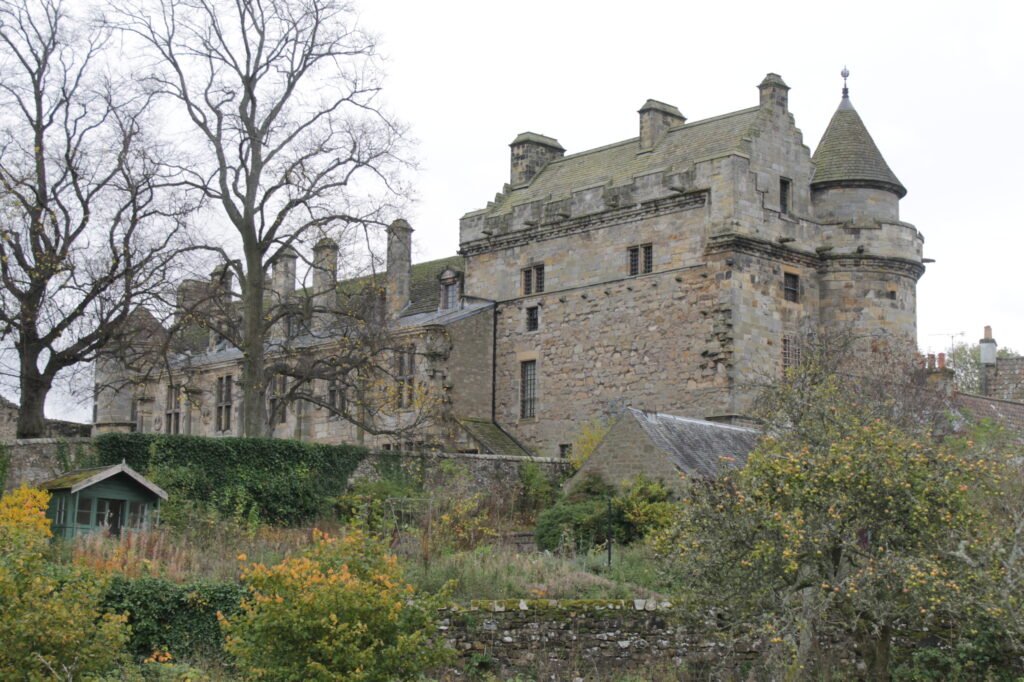
Falkland Palace Scotland is famous for its royal history, Renaissance architecture, connection with Mary, Queen of Scots, gardens, and historic real tennis court.
The palace was created as a royal pleasure residence rather than simply a defensive castle. James IV and James V transformed Falkland into an impressive country retreat where members of the royal family could escape court life and enjoy hunting, falconry, sport and the surrounding landscape.
The National Trust for Scotland explains that James IV and James V commissioned leading craftsmen and stonemasons between 1501 and 1541 to create a royal pleasure palace.
That difference is important when visiting.
A medieval castle often makes you think about walls, defence and warfare. Falkland Palace tells a different story. Here, architecture was also about status, comfort, entertainment, royal recreation and Renaissance culture.
The result is a destination where you can spend time looking at stonework and historic rooms one moment and then walk through gardens or stand beside a centuries-old tennis court the next.
The History of Falkland Palace
How Falkland Palace Began
The story of Falkland Palace goes back to the early 16th century, when Scotland’s Stewart monarchs were developing the site into a royal residence.
James IV began major work at Falkland, and his son James V continued the project. The palace was substantially developed between 1501 and 1541.
James V had strong connections with continental Europe and French royal culture. This helped influence the character of the palace and its recreational facilities.
Rather than being designed only for protection, Falkland was intended to be a sophisticated royal retreat.
The surrounding landscape was also important. The wider estate provided opportunities for hunting and other royal pursuits, helping make Falkland a place where the monarchy could combine leisure with royal display.
A Renaissance Palace in Scotland
One of the most interesting aspects of Falkland Palace Scotland is its Renaissance character.
The building reflects a period when European Renaissance ideas were influencing Scottish architecture. The palace’s design shows that Scotland’s monarchy was participating in wider European cultural trends.
The National Trust for Scotland describes Falkland as one of Scotland’s finest Renaissance palaces, while Historic Environment Scotland records the palace as a Category A listed building.
For architecture lovers, this makes Falkland particularly worthwhile.
You are not simply visiting an old royal building. You are seeing evidence of a period when Scotland’s monarchy was deliberately creating grander and more sophisticated royal environments.
Falkland Palace and Mary, Queen of Scots
Did Mary, Queen of Scots Live at Falkland Palace?
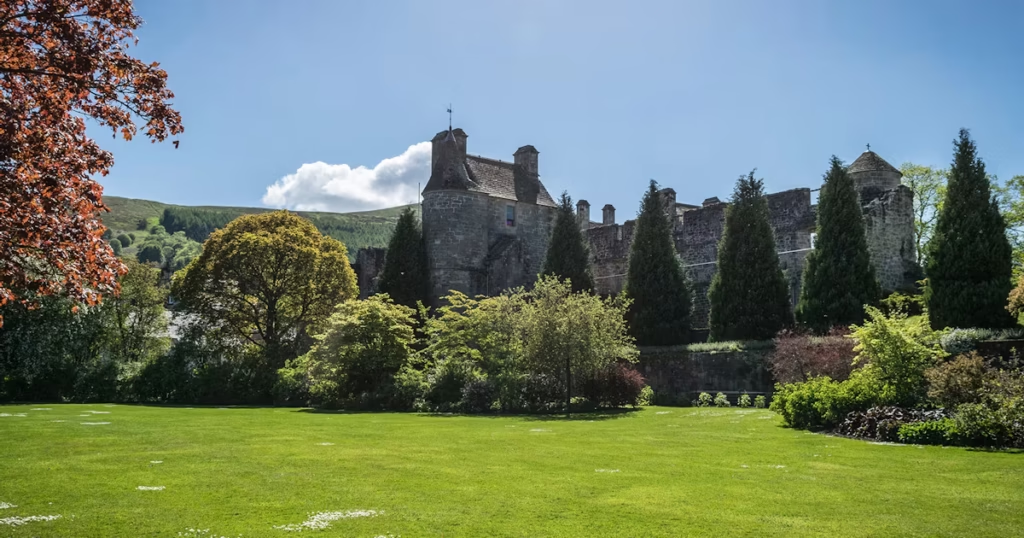
Yes. Mary, Queen of Scots was one of Falkland Palace’s most famous royal residents.
She visited Falkland during her reign and used the surrounding estate for activities including hunting and falconry. The palace was one of the royal places associated with her life in Scotland.
For many visitors, this is one of the strongest reasons to visit.
Walking through a historic building becomes much more engaging when you can connect the architecture to an identifiable person and period.
Mary’s connection also makes Falkland interesting for people who want to understand more about 16th-century Scottish royal life.
Rather than imagining history as something that happened only on battlefields, Falkland allows you to see another side of royal history:
- Where monarchs relaxed
- Where they hunted
- Where they played games
- Where royal ceremonies took place
- How royal residences were decorated
- How gardens were used
- How Renaissance culture influenced Scotland
Mary, Queen of Scots and Royal Recreation
The palace estate offered Mary opportunities to enjoy the countryside.
Historic Environment Scotland notes that during her visits between 1561 and 1565, Mary was associated with activities in the park and woods.
This helps explain why Falkland should not be viewed only as a palace building.
The surrounding landscape was part of the royal experience.
When you visit today, the gardens and outdoor areas help you understand that relationship between the palace and its estate.
The Famous Royal Tennis Court at Falkland Palace
Why Is the Tennis Court So Special?
One of the biggest surprises at Falkland Palace Scotland is the historic real tennis court.
This is not the modern lawn tennis court most people know today.
Real tennis is an older form of racquet sport that developed in Europe centuries before modern lawn tennis became popular.
The court at Falkland is exceptionally important.
Historic Environment Scotland describes it as the earliest surviving real tennis court in the world and notes that it was built between 1539 and 1541 during the remodelling of Falkland for James V.
Guinness World Records also lists the Falkland court as the oldest surviving court for real tennis.
That makes the tennis court more than a small extra attraction.
It is one of the central historical features of the entire site.
Real Tennis vs Modern Tennis
If you have never seen real tennis, the court may initially look strange.
The game uses:
- Walls
- Angled surfaces
- Galleries
- Openings in the walls
- Special markings
- A smaller and heavier ball
- Wooden racquets
- Complex scoring rules
The National Trust for Scotland explains that the Falkland court has several unusual characteristics, including being roofless and retaining the distinctive features of the earlier court design.
The Falkland Royal Tennis Club was established in 1975 and continues to preserve the tradition of the sport.
A Fascinating Fact for Visitors
The game uses scoring terms that will sound familiar to modern tennis players, including love, 15, 30, 40 and advantage, but the way points are won and played is very different.
If you enjoy unusual historical experiences, do not skip the tennis court.
Falkland Palace Gardens
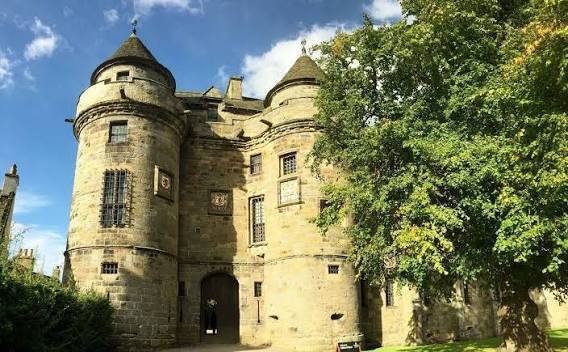
The palace gardens provide a completely different experience from the historic interiors.
Instead of focusing on stone walls and royal history, you can slow down and appreciate plants, open space and traditional garden design.
The National Trust for Scotland highlights the Physic Garden, orchard and wildflower meadow among the site’s attractions.
The Physic Garden
The Physic Garden is particularly interesting because medicinal and useful plants were an important part of historic life.
The garden gives visitors a chance to think about how people in earlier centuries understood health, plants and natural remedies.
The National Trust for Scotland describes the garden as containing fragrant Renaissance-era herbs and notes that it was developed within the foundations of what was once the Great Hall.
That combination of archaeology, gardening and history makes the garden more meaningful than a simple decorative space.
Orchard and Wildflower Meadow
The orchard and wildflower meadow add a more relaxed side to the visit.
They are particularly enjoyable if you are travelling with children or simply want a quieter part of your day.
You can take photographs, walk around the grounds and enjoy the landscape without needing to rush from one historic room to another.
Inside Falkland Palace
The Royal Apartments
The palace interior helps visitors understand how the royal residence functioned.
The National Trust for Scotland has recreated the King’s and Queen’s Rooms to help visitors visualise the former appearance and atmosphere of the apartments.
Important current visitor note: the National Trust for Scotland currently states that the King’s and Queen’s Apartments are closed for essential building work until further notice. If these rooms are a major reason for your trip, check the official visitor information before travelling.
This is a good example of why checking official information shortly before your visit is important. Historic properties sometimes close individual rooms while conservation work takes place.
Chapel Royal
The Chapel Royal is another major feature.
The National Trust for Scotland notes the survival of the original 16th-century ceiling, with later 17th-century painted decoration associated with Charles I.
It offers another perspective on royal life.
A royal residence was not simply a home. Religion, ceremony and monarchy were deeply connected, and spaces such as the chapel demonstrate that relationship.
The Bakehouse
The historic bakehouse provides a glimpse into the practical side of palace life.
Royal residences required large numbers of people working behind the scenes.
While grand rooms show how monarchs wanted to be seen, areas such as kitchens and bakehouses help visitors understand how a royal household actually operated.
That contrast is one of the most enjoyable aspects of exploring historic houses.
Falkland Palace and Outlander
If you discovered Falkland because of Outlander, you are certainly not alone.
The village of Falkland was used as a filming location for the series, and the palace itself was also used during filming.
What Was Filmed in Falkland?
In Outlander, Falkland represents 1940s and 1960s Inverness in different parts of the story.
The village locations include:
- The Covenanter Hotel, used as Mrs Baird’s Guesthouse
- The Bruce Fountain
- Fayre Earth, used as Farrell’s store
- Campbell’s Coffee House
- Falkland Town Hall
The palace itself also appeared in Season 2. The East Range cellars were transformed into an apothecary for filming, and the National Trust for Scotland now has an interactive apothecary experience inspired by that connection.
Should Outlander Fans Visit Falkland Palace?
Definitely consider adding it to your itinerary if you are interested in the show.
But there is an important distinction:
Falkland is not simply an Outlander attraction.
The television connection is an additional layer on top of a much older historical story.
The palace existed centuries before filming began, and its connections with Scottish monarchs, Renaissance architecture and real tennis are important independently of the series.
That makes it a good destination for mixed groups where some people love Outlander and others are more interested in history.
Why Visit Falkland Palace Scotland?
There are many reasons to include Falkland Palace Scotland in a Fife itinerary.
1. You Can Experience Scottish Royal History
The palace provides a direct connection to the Stewart monarchs and Mary, Queen of Scots.
Instead of only reading about Scottish history, you can walk through a surviving royal residence.
2. The Renaissance Architecture Is Remarkable
Falkland is an excellent destination for people interested in historic architecture.
The palace reflects the cultural ambitions of Scotland’s monarchy during the Renaissance period.
3. The Tennis Court Is Extraordinary
The surviving real tennis court is one of the site’s strongest historical attractions.
It is rare, unusual and easy to remember after a visit.
4. The Gardens Add Variety
You can combine indoor history with outdoor exploration.
That makes the experience less tiring than visiting one historic room after another.
5. It Is Excellent for Outlander Fans
The village and palace have genuine connections to the series.
You can recognise filming locations while also learning the real history behind them.
6. Falkland Village Is Worth Exploring
Do not immediately leave after visiting the palace.
The surrounding village has its own historic character and was also used for Outlander filming.
Falkland Palace for Families
Is Falkland Palace Scotland suitable for families?
Yes, especially if you approach the visit as an experience rather than simply a history lesson.
Children may enjoy:
- The gardens
- The living willow labyrinth
- The giant outdoor chess board
- The unusual tennis court
- Historic rooms
- Stories about kings and queens
- The Outlander connection
- Exploring the village
The National Trust for Scotland specifically lists children’s activities, a living willow labyrinth and giant outdoor chess among the visitor features.
A Simple Family Strategy
Do not spend the entire visit explaining dates and monarchs.
Instead, turn the visit into questions:
“Can you find the oldest-looking object?”
“Why do you think this tennis court looks different from a modern tennis court?”
“What would it have been like to live in this palace 500 years ago?”
“Can you find the garden maze?”
This approach makes history more interactive.
Visiting Falkland Palace With Friends
A trip with friends can be even more flexible.
You can combine the palace with:
- Village photography
- Cafés
- Historic sightseeing
- Outlander locations
- A wider Fife road trip
- St Andrews
- Coastal villages
- Other castles and historic sites
A group can divide the experience naturally.
History lovers can spend more time inside the palace, while photography lovers can explore the village and gardens.
If your friends enjoy television and film locations, you can also create a mini Outlander route through Fife and other Scottish locations.
VisitScotland includes Falkland within wider Outlander itineraries around Scotland.
Best Time to Visit Falkland Palace
The ideal time depends on what you want from your trip.
| Season | What to Expect |
|---|---|
| Spring | Gardens begin to become more colourful and the countryside feels fresh |
| Summer | Longer daylight and good conditions for combining palace and village sightseeing |
| Early autumn | Cooler atmosphere and changing seasonal colours |
| Late autumn/winter | Quieter atmosphere, but seasonal opening arrangements may differ |
The National Trust for Scotland currently publishes seasonal opening information, so always check the official page before setting out.
For photography, morning or late afternoon can give the surrounding village and architecture a softer atmosphere.
For a first-time visitor, however, the most important factor is not simply the season.
It is checking the current opening arrangements before travelling.
Falkland Palace Opening Hours and Tickets
Current National Trust for Scotland information for the March 1–October 31 period lists:
- Palace: 11:00–17:00
- Last palace entry: 16:15
- Guided tour: 10:00 Wednesday–Saturday
- Shop and garden: 09:30–17:00
Current listed admission prices include:
| Ticket | Current listed price |
|---|---|
| Adult | £19 |
| Family | £44 |
| One-adult family | £33 |
| Concession | £15.50 |
| Child | £10 |
| Under 5 | Free |
| Young Scot | £1 |
Members of the National Trust for Scotland can enter free.
Prices and opening times can change, so use the official National Trust for Scotland visitor page for the latest information before your journey.
Official Falkland Palace visitor information
How to Get to Falkland Palace
Falkland Palace is located in the village of Falkland in Fife.
The official address is:
Falkland Palace, Falkland, Cupar, Fife, KY15 7BY.
The palace is approximately 11 miles from Cupar and 11 miles from Kirkcaldy.
By Car
Driving is one of the easiest options if you are exploring several places around Fife.
The National Trust for Scotland says free parking is available in a nearby public car park. Street parking immediately opposite the palace is limited and restricted to 30 minutes.
From Edinburgh
Falkland can work well as part of a day trip from Edinburgh, particularly if you combine it with other destinations in Fife.
Several organised tours also combine Falkland with destinations such as St Andrews. VisitScotland currently lists tours departing from Edinburgh that include Falkland Palace.
From St Andrews
Falkland is a useful addition to a wider Fife itinerary.
A day combining St Andrews + Falkland Palace can give you a mixture of medieval history, royal history, architecture, golf culture and village scenery.
How Long Do You Need at Falkland Palace?
For the palace itself, allow around 2–3 hours if you want to explore without rushing.
A longer visit makes sense if you also want to explore Falkland village.
Suggested 3-Hour Visit
First 60 minutes:
Explore the palace and historic interiors.
Next 30–45 minutes:
Visit the gardens, Physic Garden and outdoor areas.
Next 20–30 minutes:
See the royal tennis court.
Final 45–60 minutes:
Walk around Falkland village, take photographs and visit relevant Outlander locations.
If you have half a day, you can slow down and enjoy the experience much more comfortably.
Falkland Palace Scotland: Suggested Half-Day Itinerary
Here is an easy itinerary for first-time visitors.
9:30 AM — Arrive in Falkland
Start with the village before the main palace visit if the gardens and shop are open.
10:00 AM — Explore the Palace Area
If available on your date, consider the morning guided tour.
11:00 AM — Explore the Palace
Spend time understanding the royal history rather than simply taking photographs.
12:00 PM — Visit the Gardens
Walk through the Physic Garden, orchard and wildflower areas.
12:30 PM — See the Royal Tennis Court
Spend a few minutes learning how real tennis differs from modern tennis.
1:00 PM — Explore Falkland Village
Look for the locations associated with Outlander and enjoy the historic streets.
1:30 PM — Lunch or Coffee
Falkland has cafés and tearooms, according to the National Trust for Scotland’s visitor information.
Falkland Palace and St Andrews: A Great Fife Combination
If you have a full day available, combining Falkland Palace and St Andrews is a practical way to see two very different sides of Fife.
St Andrews is internationally associated with golf, its historic university, medieval heritage and coastline.
Falkland provides a much quieter experience centred around royal history, architecture, gardens and village atmosphere.
VisitScotland currently features organised itineraries combining St Andrews and Falkland Palace.
A simple route could be:
Morning: Falkland Palace
Lunch: Falkland or on the way to St Andrews
Afternoon: St Andrews
Evening: Return to your accommodation
This works especially well for travellers who want a mixture of famous Scottish attractions and less urban historic places.
Falkland Palace vs a Scottish Castle: What Is Different?
Visitors sometimes search for castles when planning a Scotland trip and may wonder whether a palace is worth adding.
The experience is different.
| Falkland Palace | Traditional Castle Experience |
|---|---|
| Royal pleasure residence | Often focused on defence |
| Renaissance influence | Often medieval or later |
| Gardens are important | Defensive landscape may dominate |
| Royal recreation | Warfare and fortification may be central |
| Real tennis court | Usually no equivalent |
| Mary, Queen of Scots connection | Depends on the castle |
| Outlander village connection | Depends on location |
This difference is precisely why Falkland Palace Scotland can complement a castle-heavy Scotland itinerary.
You get to see how the monarchy lived and entertained itself, not only how buildings were defended.
Photography at Falkland Palace
Falkland is a strong destination for travel photography because the subject matter changes constantly.
You can photograph:
- Renaissance architecture
- Palace details
- Doorways
- Stonework
- Gardens
- Flowers
- The tennis court
- Historic village streets
- Traditional buildings
- The surrounding Fife landscape
For the best travel photography, do not take only wide photographs of the palace.
Look for small details.
A close photograph of stonework can tell a different story from a wide image of the entire building.
The contrast between historic architecture and greenery is also useful for travel bloggers and social media creators.
What to Know Before Visiting Falkland Palace
A little preparation can make your visit easier.
1. Check Current Opening Information
Historic properties can have temporary closures.
The National Trust for Scotland currently notes that the King’s and Queen’s Apartments are closed for essential work until further notice.
2. Wear Comfortable Shoes
You will want to walk through the palace, gardens and village.
3. Give Yourself More Than an Hour
A rushed visit can miss some of the site’s best details.
4. Check the Weather
Scotland’s weather can change quickly.
A light waterproof layer can be useful even during warmer months.
5. Do Not Ignore the Village
Falkland itself is an important part of the experience.
6. Check Photography Rules
Historic buildings can have specific photography rules, especially around interiors.
7. Plan for Children
If travelling with children, use the gardens, chess board and willow labyrinth to break up the historical sections.
Is Falkland Palace Worth Visiting?
For travellers interested in Scottish history, royal heritage, Renaissance architecture, gardens, Mary, Queen of Scots, real tennis or Outlander, Falkland Palace offers several different reasons to visit.
Its strongest feature is arguably the way these subjects overlap.
You can begin with Scottish royal history, discover Renaissance architecture, walk through a historic garden, see a centuries-old sporting venue and then explore a village recognised from a major television series.
That variety makes Falkland more than a single-attraction stop.
It can become a small journey through several layers of Scottish history.
Frequently Asked Questions About Falkland Palace Scotland
Where is Falkland Palace Scotland?
Falkland Palace is in the historic village of Falkland in Fife, Scotland. Its official address is Falkland Palace, Falkland, Cupar, Fife, KY15 7BY. It is around 11 miles from Cupar and 11 miles from Kirkcaldy.
Who built Falkland Palace?
The palace was developed under James IV and James V of Scotland, with major construction and remodelling taking place between approximately 1501 and 1541.
Did Mary, Queen of Scots visit Falkland Palace?
Yes. Mary, Queen of Scots was one of Falkland’s most famous royal residents and used the estate for activities including hunting and falconry.
Is Falkland Palace connected to Outlander?
Yes. Falkland village was used as Inverness in Outlander, and Falkland Palace itself was also used during filming. The palace’s East Range cellar was transformed into an apothecary for the series.
Is the tennis court at Falkland Palace the oldest?
The surviving real tennis court at Falkland is recognised as the oldest surviving real tennis court in the world. Historic Environment Scotland dates its construction to between 1539 and 1541, while Guinness World Records also recognises Falkland’s court.
How much does Falkland Palace cost to visit?
Current National Trust for Scotland information lists adult admission at £19, family admission at £44 and child admission at £10, with children under five free. Prices can change, so check the official visitor page before travelling.
How long should I spend at Falkland Palace?
Around two to three hours is a useful starting point for the palace and gardens. If you want to explore Falkland village and its Outlander locations, allow additional time.
Is Falkland Palace good for families?
Yes. The site includes children’s activities, a living willow labyrinth and a giant outdoor chess board, alongside gardens and historical attractions.
Can you visit Falkland Palace without being an Outlander fan?
Absolutely. Outlander adds an interesting connection, but the palace’s Renaissance architecture, royal history, gardens and real tennis court make it worthwhile independently of the television series.
What else can I visit near Falkland Palace?
Falkland works well as part of a wider Fife itinerary. St Andrews, historic villages and other heritage attractions can be combined with the palace. VisitScotland specifically features itineraries combining Falkland with St Andrews.
Final Thoughts on Falkland Palace Scotland
Falkland Palace Scotland is one of those destinations where the history becomes easier to understand because you can experience several different elements in one place.
The palace shows the ambitions of Scotland’s Renaissance monarchy. The royal tennis court reveals how elite recreation worked centuries ago. The gardens show another side of historic royal life. Mary, Queen of Scots connects the site to one of the most famous figures in Scottish history. And the Outlander connection gives modern visitors another reason to explore the village.
But perhaps the best part is that Falkland does not feel like a destination you need to rush through.
Take your time.
Explore the palace.
Look carefully at the architecture.
Walk through the gardens.
Stand beside the historic tennis court.
Then leave the palace grounds and explore Falkland itself.
If you are building a Scotland itinerary around history, royal heritage, photography, gardens, Renaissance architecture or Outlander locations, Falkland is a fascinating stop to include.
And if you are already exploring destinations beyond Scotland, you can continue your travel research through our guide to Caribbean places for another completely different collection of landscapes, islands and travel experiences.
Useful Official Resources
For the most accurate practical information before travelling, check:



One thought on “Falkland Palace Scotland: A Complete Travel Guide to History, Gardens, Royal Tennis & Outlander”