
Free Things to Do in Manchester: 16 Brilliant Places, Walks and Budget-Friendly Experiences
Finding free things to do in Manchester is surprisingly easy once you know where to look. You can spend a morning inside a dramatic historic library, explore a museum in the afternoon, and finish beside canals lined with old warehouses, all without paying an admission fee.
However, planning a good budget trip takes more than collecting a list of free attractions. Some venues close on particular weekdays. Others recommend advance reservations, while special exhibitions, parking and transport can add costs to an otherwise free day.
This guide brings those details together. You will find museums, galleries, neighbourhood walks and green spaces, plus suggestions for families, couples and rainy days. There is also a manageable one-day itinerary and advice on choosing attractions that fit together geographically.
Most places featured are in Manchester itself. The waterfront suggestions around Salford Quays and IWM North extend into neighbouring Salford and Trafford, within Greater Manchester.
What “free” means here: The recommended visit or activity has no standard admission charge. Food, travel, optional donations, special events and other extras may cost money.
Visitor information checked in October 2026. Use the official links before travelling, as opening arrangements and access can change. Suggested visit lengths are planning estimates, not venue requirements.
Free Things to Do in Manchester at a Glance
For a first visit, choose two main attractions and one outdoor area. You will usually enjoy the city more with time to explore than with a schedule that sends you rushing between buildings.
| Place or activity | Area | Best for | Suggested time | Main planning consideration |
|---|---|---|---|---|
| John Rylands Library | Deansgate | Architecture and books | 45–75 minutes | Check public opening days |
| Manchester Art Gallery | City centre | Art and rainy days | 60–90 minutes | Check exhibitions and opening days |
| Manchester Central Library | St Peter’s Square | Architecture and local history | 30–60 minutes | A working library; respect quiet areas |
| Manchester Cathedral | Cathedral area | Heritage and a peaceful break | 30–45 minutes | Services can affect visitor access |
| Science and Industry Museum | Castlefield | Families and industrial history | 90–150 minutes | Book ahead; check restoration updates |
| People’s History Museum | Spinningfields | Democracy and social history | 90–120 minutes | Donations are optional |
| Northern Quarter street-art walk | Northern Quarter | Photography and independent culture | 45–90 minutes | Murals change over time |
| Castlefield canals and Roman heritage | Castlefield | Walking and city history | 60–90 minutes | Some paths have uneven surfaces |
| Ancoats and New Islington walk | East of the centre | Industrial architecture and waterside scenery | 60–90 minutes | Respect residential areas |
| Manchester Museum | Oxford Road | Natural history and cultural collections | 90–150 minutes | Main temporary exhibition requires booking |
| The Whitworth | Oxford Road | Art and a park combination | 60–90 minutes | Check current displays and access updates |
| Mayfield Park | Near Piccadilly | Families and outdoor breaks | 45–90 minutes | Check current gate times |
| Heaton Park | North Manchester | Longer walks and picnics | 2–4 hours | Transport, parking and extras may cost |
| Salford Quays waterfront | Salford | Architecture and waterside walks | 60–120 minutes | Allow travel time from central Manchester |
| Lowry galleries | Salford Quays | Art and local cultural connections | 60–90 minutes | Free gallery tickets may be required |
| IWM North | Trafford waterfront | Conflict history and reflection | 90–120 minutes | Consider exhibition content for children |
The admission and booking distinctions above follow the venues’ visitor guidance; the suggested durations are editorial estimates.
Free Museums, Libraries and Historic Buildings in Manchester
1. Step Inside John Rylands Library
John Rylands Library is a strong starting point for anyone who enjoys impressive interiors. Its historic architecture gives a visit a different atmosphere from a conventional museum, while displays provide reasons to slow down beyond taking photographs.
The library confirms that admission is free and that general visitors do not need to book. Check its opening schedule before building your day around it.
Allow time to look closely at the building as well as the material on display. Rather than moving immediately from one photo opportunity to another, choose a few architectural details and examine how they shape the rooms.
This is also an easy attraction to combine with other central sights. Afterwards, continue towards Spinningfields or head south along Deansgate towards Castlefield.
Best for: First-time visitors, architecture enthusiasts and book lovers.
Planning tip: Keep conversations quiet and follow staff guidance about photography and restricted areas.
Check the official John Rylands Library visitor information before setting out.
2. Browse Manchester Art Gallery
Manchester Art Gallery is a convenient choice when you want culture without a complicated journey. Its central location makes it easy to include between other sights, and the gallery confirms that general entry is free, with no booking required.
You do not need an art-history background to enjoy a visit. Choose a small number of works that catch your attention, then spend a few minutes looking before reading the labels. Notice the setting, expressions, colours and details that initially escape you.
For couples or friends, try choosing one favourite piece each and explaining why. This turns a gallery visit into a conversation rather than a checklist.
If you are travelling with children, keep the first visit short. Looking carefully at three interesting works can be more rewarding than trying to cover every room.
Best for: Rainy days, solo travellers and a relaxed cultural stop.
Planning tip: Check the current programme rather than assuming that a particular artwork will be displayed.
See Manchester Art Gallery’s visitor information for practical details.
3. Explore Manchester Central Library
Manchester Central Library offers a useful combination of architecture, reading spaces and local-history resources. Located at St Peter’s Square, it also works well as a pause during a city-centre walk.
The council’s library pages list archives, special collections, a music library and events, allowing you to plan around your interests. Not every service is a drop-in visitor attraction, so check requirements for research or specialist access.
For a casual visit, focus on publicly accessible spaces and whatever displays are available. Keep in mind that people come here to study, work and read. A respectful visit means speaking quietly and avoiding photographs that intrude on other users.
Outside, take a few minutes to appreciate the surrounding civic setting before continuing towards Manchester Art Gallery.
Best for: Architecture, local history and a quiet indoor break.
Planning tip: Opening arrangements differ from many tourist attractions. In particular, check the day of the week before making a special trip.
Use the Manchester Central Library guide to find opening information and current activities.
4. Visit Manchester Cathedral
Manchester Cathedral offers a quieter change of pace from the surrounding shopping streets. It is particularly useful when you want a short heritage stop rather than another lengthy museum visit.
Ordinary visits are free, although donations are encouraged. Services and special events can change which areas visitors may enter.
Take time to look at the interior rather than treating the building as a quick photo stop. Details often become more noticeable once your eyes adjust and you stop moving.
Remember that this is an active place of worship. If a service is taking place, follow the guidance at the entrance and avoid interrupting worshippers.
The cathedral also provides a convenient northern anchor for a city-centre itinerary. You can continue towards Deansgate or explore nearby streets before heading towards the Northern Quarter.
Best for: Historic architecture, reflection and shorter visits.
Planning tip: A suggested donation is different from a compulsory entrance fee.
Check Manchester Cathedral’s visiting guidance for access arrangements.
5. Discover the Science and Industry Museum
The Science and Industry Museum is a natural choice for travellers interested in the ideas and technologies that shaped Manchester.
General admission is free, and the museum recommends booking ahead. Some special exhibitions and events have separate charges. Its visitor information also highlights an ongoing restoration project, making it important to check what is accessible before arriving.
Build your visit around the open galleries rather than an old photograph or an outdated list of highlights. This helps avoid disappointment if a particular space is unavailable.
For families, let children spend longer at the displays that hold their attention. There is little benefit in rushing through an engaging section simply to cover more ground.
Afterwards, continue into Castlefield for an outdoor walk. The combination gives your day a useful balance between exhibits and the surrounding city.
Best for: Families, engineering interests and industrial heritage.
Planning tip: Check whether an advertised activity is part of free admission or needs an additional ticket.
Plan through the Science and Industry Museum’s official visitor page.
6. Understand Social Change at the People’s History Museum
The People’s History Museum adds another dimension to a Manchester visit by focusing on democracy and the people involved in social and political change.
It is free to enter, with donations encouraged. Group visits have separate booking arrangements, so larger parties should check the museum’s guidance.
This is a good place to slow down and read. Instead of trying to absorb every display, choose a question to guide your visit: Who gained a voice? What methods did campaigners use? How did ordinary people organise around shared concerns?
That approach can make the material more memorable, especially if you are visiting with teenagers or friends who enjoy discussion.
Allow some breathing room afterwards. A reflective museum visit pairs well with a walk rather than another immediate session of intensive reading.
Best for: Social history, democracy and thoughtful conversations.
Planning tip: Check the opening day carefully when combining this museum with other venues.
Find practical details on the People’s History Museum visitor page.
Free Walks and Neighbourhoods in Manchester
7. Follow Your Own Northern Quarter Street-Art Route
The Northern Quarter is a rewarding area for a self-guided walk, with street art, independent shops and creative spaces contributing to its character. Visit Manchester identifies these as defining features of the neighbourhood.
Begin around Stevenson Square and explore nearby streets at a comfortable pace. Look beyond the largest murals: smaller pieces, shopfront details and contrasting building textures can be just as interesting.
Avoid relying on a single mural as the reason for your trip. Street art changes, and walls shown in older photographs may look different when you arrive.
A useful photography challenge is to capture three versions of the same neighbourhood: one wide street scene, one architectural detail and one piece of public art. This encourages you to notice more without spending anything.
Best for: Photography, casual exploring and independent culture.
Planning tip: Keep pavements and shop entrances clear when taking photographs.
The official Northern Quarter neighbourhood guide provides a helpful introduction.
8. Walk Through Castlefield’s Canals and Roman Heritage
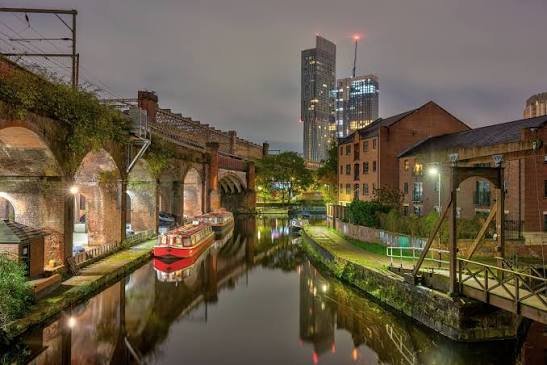
Castlefield brings several layers of Manchester’s history into one walk. Canals, railway structures and the Roman fort area make it an appealing place to explore on foot.
For a more structured route, the National Trust publishes a historic Castlefield walk with interpretation of the area and a step-free route alternative.
Start with a short loop rather than committing to a long towpath journey. Stop where you can appreciate the relationship between the water, warehouses and overhead structures.
Photographers can look for reflections, repeated arches and contrasts between old infrastructure and newer buildings. You do not need specialist equipment; allowing time to observe the light matters more.
Some surfaces may be uneven or slippery, especially after rain. Choose suitable footwear and keep children close beside the water.
Best for: Industrial scenery, history and an unhurried walk.
Planning tip: Canal-level walking and admission to Castlefield Viaduct are separate activities.
Use the National Trust’s historic Castlefield walking route to add context.
9. Explore Ancoats and New Islington on Foot
Ancoats offers another perspective on Manchester’s changing urban landscape. Visit Manchester highlights its industrial character and canalside walks, making it a useful continuation from the Northern Quarter.
Walk through Ancoats before continuing towards the waterside around New Islington. Pay attention to how older buildings sit beside newer homes and public spaces.
This is an especially good activity if you enjoy understanding a city through its neighbourhoods. You can appreciate the setting without booking a tour or making a café stop.
However, remember that much of the area is residential. Stay on public routes, avoid photographing into homes and give residents space around entrances and moorings.
Best for: Urban photography, architecture and a quieter extension to a central walk.
Planning tip: Combine this with the Northern Quarter rather than travelling across the city for a brief standalone stop.
For broader neighbourhood context, explore Visit Manchester’s neighbourhood guide.
Free Attractions Around Oxford Road
10. Spend Time at Manchester Museum
Manchester Museum is one of the strongest choices for a substantial indoor visit. Its natural-history and cultural collections make it suitable for groups with different interests.
The museum states that its galleries and exhibitions are free, but advance booking is required for the main temporary exhibition. Check that distinction before assuming you can enter every space without a reservation.
For an enjoyable visit, identify two or three priorities rather than attempting to read everything. Families might let each person choose a section, while solo travellers can spend longer with the subjects that interest them most.
Take breaks between galleries. Museum fatigue can make even excellent collections feel overwhelming, especially if you have already spent the morning sightseeing.
Its Oxford Road location makes it sensible to combine with the Whitworth, provided both are open and you have enough time.
Best for: Families, curious travellers and an extended rainy-day visit.
Planning tip: Reserve the temporary exhibition separately when required.
Visit the Manchester Museum planning page before travelling.
11. Combine the Whitworth with an Outdoor Break
The Whitworth is free to visit and offers a useful cultural stop along Oxford Road. Its official website includes current exhibitions, visitor information and operational updates.
A visit works particularly well when you want a slower day. Spend time with the current displays, then take an outdoor break in the surrounding park area if the weather allows.
You do not have to understand every work immediately. Try asking what materials were used, what mood the piece creates and how your reaction changes after reading the explanation.
If you have already visited Manchester Museum, leave room for a proper break between venues. Two shorter, focused visits can be more satisfying than several hours of continuous gallery browsing.
Best for: Art lovers, couples and a museum-and-park combination.
Planning tip: Check what is currently on display instead of assuming that a collection highlight will always be available.
Find the latest details through the Whitworth visitor guide.
Free Parks and Outdoor Spaces in Manchester
12. Take a Break at Mayfield Park
Mayfield Park is a practical choice when you want green space near the city centre. Its landscaped areas, seating and different outdoor spaces make it useful for a pause between sightseeing stops.
The park’s official website provides current access information. Check the gate times directly, particularly if you are planning an evening visit.
For families, a park stop can provide a welcome change after museums and busy streets. For other travellers, it offers a place to sit, organise photographs or enjoy a packed lunch where permitted.
Avoid making your schedule depend on perfect weather. If the forecast is uncertain, keep Mayfield as a flexible addition rather than the only activity planned for that part of the day.
Best for: Outdoor breaks, families and a pause near Piccadilly.
Planning tip: Nearby food, drink and entertainment businesses have their own prices and access arrangements.
Check the official Mayfield Park website for visitor updates.
13. Plan a Longer Walk in Heaton Park
Heaton Park is better suited to a dedicated outdoor visit than a quick stop between city-centre attractions. The council provides a park map, visitor information and details of what to see and do.
Choose a route that matches your energy and the weather. A simple combination of walking, a picnic and time to rest can fill a satisfying half-day.
Remember that a free park visit does not automatically mean a completely free outing. Travel, parking, refreshments and optional attractions can still cost money. Decide in advance whether you are planning a walking day or adding paid activities.
Bring water and suitable footwear, and avoid overloading the schedule with another distant attraction afterwards.
Best for: Picnics, families and travellers who want more outdoor time.
Planning tip: Check the park map before choosing your entrance and return route.
Use Manchester City Council’s Heaton Park information to plan your visit.
Free Things to Do Around Salford Quays
14. Enjoy a Self-Guided Waterfront Walk
Salford Quays offers a different setting from central Manchester, with broad waterfront views and contemporary buildings replacing the tighter streets of the centre.
Make the journey worthwhile by allowing time to walk, pause and explore. A rushed visit between two distant appointments is unlikely to do the area justice.
For a simple outing, choose a starting point near your arrival stop, follow public waterfront routes and finish near your return connection. If you want an indoor component, combine the walk with Lowry or IWM North.
The outdoor portion is particularly enjoyable when visibility is good. In cold or wet conditions, shorten the walk and spend more time inside your chosen attraction.
Best for: Couples, architecture photography and a change of scenery.
Planning tip: Treat the Quays as a separate half-day area. Transport from central Manchester may cost money.
Visit Manchester’s official attractions guide includes Lowry and IWM North among the wider area’s cultural attractions.
15. Visit the Free Galleries at Lowry
Lowry gives an art-focused purpose to a trip to Salford Quays. Its galleries are free to enter, while theatre performances and other activities have their own ticket arrangements.
The venue’s guidance asks visitors to book tickets for its Modern Life exhibition to help manage capacity. Free admission therefore should not be confused with unrestricted drop-in access to every experience.
Take time to look closely at individual works rather than moving quickly through the galleries. Consider how people, buildings and spaces are represented, then compare that impression with the modern waterfront outside.
This can make an interesting day for travellers who enjoy connecting art with a place.
Best for: Art lovers, couples and a cultural waterfront outing.
Planning tip: Check the particular exhibition you want to visit, including any ticket or timed-entry requirement.
See the Lowry gallery information before making your plans.

16. Reflect on Conflict at IWM North
IWM North is another substantial free attraction in the waterfront area. Its official ticket guidance confirms that general entry is free and that an advance general-admission ticket is not required.
Approach this visit with enough time and attention for the subject matter. Displays about war and its effects can be emotionally demanding, so it is worth choosing a pace that suits your group.
Families should review the current content and consider how comfortable younger children may be with it. A shorter visit with opportunities to talk can work better than trying to see everything.
Afterwards, a waterfront walk provides space to reflect before continuing your day.
Best for: History enthusiasts, older children and reflective travel.
Planning tip: General admission does not determine the price or booking arrangements of every separately advertised event.
Check IWM North’s official admission information for current guidance.
Free Attractions That Need Extra Planning
Some places appear frequently in Manchester budget guides but require more care than a simple “turn up for free” recommendation suggests.
Castlefield Viaduct: Check Its Reopening Status
Castlefield Viaduct is separate from the canalside neighbourhood below. At the October 2026 check, its official page listed it as closed, so it should not be treated as a guaranteed stop in your itinerary.
Check the National Trust’s Castlefield Viaduct page for reopening information. You can still plan a Castlefield neighbourhood walk without relying on access to the elevated garden.
Greater Manchester Police Museum: Match Your Visit to an Opening Day
The Greater Manchester Police Museum is a useful additional option, especially for visitors exploring the Northern Quarter.
Its published regular public opening is Tuesday, with free entry. Do not assume that it follows the same daily schedule as a larger museum.
Check the museum’s opening information before including it.
National Football Museum: Do Not Assume Universal Free Admission
Football fans should check current admission categories rather than relying on older articles calling the National Football Museum free. Its official visitor page lists ticketed admission and changing offers.
Review the National Football Museum’s admission page for any eligibility-based concessions or promotions relevant to your visit.
Chetham’s Library: Visitor Access Requires Planning
Chetham’s Library states that visitor access is through pre-booked tours and events because it shares its site with Chetham’s School of Music. It should not be presented as an unrestricted free walk-in alternative to John Rylands Library.
Check Chetham’s Library visiting information for tour availability and current ticket conditions.
A Realistic One-Day Itinerary for Manchester on a Budget
The best one-day route leaves room for opening times, breaks and personal interests. This suggested itinerary concentrates on central Manchester, avoiding a separate journey to the Quays or Heaton Park.
Before you go: Confirm that John Rylands Library and your chosen afternoon attraction are open on the same day. The times below are flexible planning windows.
| Part of the day | Suggested activity | Approximate time |
|---|---|---|
| Morning | John Rylands Library | 45–75 minutes |
| Late morning | Walk towards the cathedral and visit if accessible | 60–75 minutes including walking |
| Lunch | Eat a packed lunch in a suitable public space or choose a budget meal | 30–45 minutes |
| Early afternoon | Choose Manchester Art Gallery or the People’s History Museum | 60–120 minutes |
| Late afternoon | Finish with a Northern Quarter or Castlefield walk | 60–90 minutes |
Why This Route Works
The itinerary alternates indoor visits with walking. It also gives you a genuine choice rather than suggesting that every major attraction can fit comfortably into one day.
Choose Manchester Art Gallery and the Northern Quarter if you want an art-focused day.
Choose the People’s History Museum and Castlefield if you prefer social history and industrial scenery.
Avoid adding both Manchester Museum and Salford Quays to this schedule. Each deserves more time than a hurried detour allows.
What Will the Day Cost?
Admission to the selected free attractions can total £0. Your actual spending depends on getting to Manchester, local travel, meals, luggage storage and optional purchases.
If you are staying centrally, walking between attractions and bringing food can keep additional spending low. However, a packed lunch brought from home still has a cost; it simply reduces the need to buy meals while sightseeing.
The useful distinction is between a free sightseeing itinerary and a trip with no expenses whatsoever.
How to Spend Two Days Without Paying Attraction Entry Fees
A second day lets you explore beyond the central highlights without rushing.
Option One: City Centre and Oxford Road
Spend the first day following the central itinerary. On day two, visit Manchester Museum and the Whitworth, with a substantial break between them.
This is a strong combination for travellers who enjoy collections, culture and indoor activities. Keep the evening flexible rather than adding a third major museum.
Option Two: City Centre and the Quays
Follow the central route on day one. On day two, choose Lowry or IWM North as your main attraction, then add a waterfront walk.
You can visit both cultural venues if their opening arrangements align, but decide based on your interests and energy. Two meaningful visits are better than racing through both because they are nearby.
Option Three: Culture and Green Space
Use the first day for central museums and architecture. Give the second day to Heaton Park, with time for a picnic and an unhurried walk.
This variation suits travellers who find consecutive museum days tiring or families who want more outdoor freedom.
Best Free Things to Do in Manchester When It Rains
Rain does not have to spoil a budget visit. The main challenge is choosing indoor attractions close enough together that you do not spend the day crossing the city in wet clothes.
For a compact central plan, combine Manchester Art Gallery with Central Library, subject to their opening schedules. For a longer cultural visit, choose Manchester Museum and consider the Whitworth afterwards.
John Rylands Library is another strong indoor option, but check its public opening days rather than treating it as an automatic backup.
A good rainy-day strategy has three parts:
- Choose one main attraction where you would happily spend at least an hour.
- Identify one nearby alternative in case access changes.
- Keep the outdoor section short and optional.
Carry a waterproof layer and protect anything important in your bag. Comfortable shoes matter just as much as an umbrella when your itinerary involves walking between venues.
If the forecast improves, add a brief neighbourhood walk. You do not need to abandon a good indoor plan simply because the rain stops.
Free Family Days Out in Manchester
Planning free things to do in Manchester with children works best when you balance discovery with movement and rest.
A museum followed by a park is often more manageable than several indoor attractions in succession. Younger children may enjoy a short visit far more than an ambitious all-day programme.
| Family preference | Suggested approach | Why it works |
|---|---|---|
| Curious children who enjoy exhibits | Manchester Museum with breaks | Different interests can guide the visit |
| Children interested in how things work | Science and Industry Museum | A focused main activity avoids too much travelling |
| Families needing outdoor time | Mayfield Park or Heaton Park | Space for a change of pace |
| Older children interested in society | People’s History Museum | Displays can prompt discussion |
| Families visiting the Quays | One gallery or museum plus a short waterfront walk | Indoor and outdoor time stay in the same area |
Before leaving, check toilets, baby-changing information, food rules and any activity booking requirements on the relevant venue’s website.
Set expectations about shops and paid extras before entering. Explaining that the day is about exploring rather than buying something at every stop can prevent frustration later.
For a simple free activity, let children choose a theme to notice throughout the day: animals in artwork, unusual windows, bridges, patterns or different building materials.
Free Things to Do in Manchester for Couples and Solo Travellers
A good date does not require paid entertainment at every stage. Try a gallery visit followed by a neighbourhood walk, or choose Castlefield for an afternoon of photography and conversation.
Give the outing a small shared challenge. Each person could choose a favourite artwork, find an interesting architectural detail or photograph the same scene differently. These activities create something to discuss without requiring a purchase.
For solo travellers, free attractions offer flexibility. You can spend longer with an exhibition that interests you, leave when your attention fades or change your route when the weather improves.
Keep evening plans realistic. A daytime walking route does not automatically make an appealing late-night route, especially beside water or through quieter areas. Prefer active, well-lit streets and check your journey back.
Anyone looking specifically for free evening entertainment should verify the exact event listing. A venue that occasionally hosts a free performance may charge on other nights or require a booking.
Getting Around Manchester Without Overspending
Walk Between Nearby Attractions
Walking is usually the simplest way to connect central sights if the distance suits your mobility and energy.
Group activities geographically. Deansgate, Spinningfields and Castlefield make one useful cluster; the Northern Quarter and Ancoats make another. Oxford Road and Salford Quays are better treated as separate areas within a short trip.
Download a map before leaving your accommodation, but use it as a guide rather than following it blindly. Entrances, building works and pedestrian diversions can affect the easiest route.
Use the Designated Free City-Centre Bus
Manchester has designated free bus services connecting central destinations and transport hubs. The council confirms that these buses are wheelchair accessible.
Check the official Manchester free bus information for routes and operating times.
Do not assume that every city bus is free. The service applies to specific routes, and journeys beyond its coverage may require a paid ticket.
Count the Whole Journey
A free museum across the city may be less economical than a nearby attraction once you include return travel.
Before adding an extra stop, ask:
- How long will the journey take?
- Will I need another ticket?
- Does the attraction interest me enough to justify the trip?
- Could I combine it with another nearby activity?
This prevents a budget itinerary from becoming expensive through unnecessary travel.
Practical Tips for a Better Budget Visit
Check Opening Days Before Planning the Route
A common planning mistake is arranging attractions by location without checking whether they are open together.
Choose your most important venue first. Confirm its opening day, then build the rest of the route around compatible options.
Book Free Tickets Where Necessary
Free entry and advance booking are separate questions. A reservation can help venues manage capacity even when there is no admission charge.
Save confirmations somewhere you can access easily. If your plans change, cancel unused reservations when the venue offers that option.
Plan for Accessibility in Advance
Historic buildings and canalside routes can have different access conditions. Review venue access guides for lifts, entrances, seating, toilets and sensory information.
For outdoor walks, consider surfaces and gradients as well as distance. A shorter route is not always the easier one.
Keep Donations Optional
Some free attractions rely on donations. Contribute if you can and want to, but distinguish a suggested contribution from a required ticket price.
You can also support venues by treating spaces respectfully and following visitor guidance.
Leave Space in the Schedule
Include time for toilets, navigation, queues and simply sitting down. A route that looks easy on a map can feel very different after several hours on your feet.
One less attraction often creates a more enjoyable day.
Apply the Same Budget Planning to Future Trips
The habit of separating admission costs, local travel and optional extras works beyond Manchester. If you are considering a different destination next, TravellingToo’s Kazakhstan travel tips for tourists covers practical trip planning, transport and budgeting for a broader adventure.
Use destination-specific guidance for each trip rather than assuming that costs or travel arrangements will work the same way everywhere.
Frequently Asked Questions About Free Things to Do in Manchester
What are the best free things to do in Manchester for first-time visitors?
Start with John Rylands Library, Manchester Art Gallery and a Castlefield or Northern Quarter walk. This combination introduces architecture, culture and neighbourhood character without requiring an overly complicated route. Check opening days before choosing the order.
Can you spend a full day in Manchester without paying admission fees?
Yes. Several major museums, galleries and historic buildings offer free general entry. Combine two indoor attractions with a self-guided walk for a full day of sightseeing. Transport, food and optional extras remain separate expenses.
Which free Manchester attractions are best when it rains?
Manchester Art Gallery, Manchester Museum, John Rylands Library, the Science and Industry Museum and the People’s History Museum are useful indoor choices. Select venues that are open that day and close enough together for a comfortable route.
Is John Rylands Library free to visit?
Yes. The library’s visitor guidance confirms free admission without general advance booking. Check public opening days and any access updates before travelling. Research access and specialist services may have separate arrangements.
Do free museums in Manchester require booking?
Some recommend or require reservations for particular visits. The Science and Industry Museum recommends advance booking, while Manchester Museum requires it for its main temporary exhibition. Check the exact attraction and exhibition rather than relying on a general rule.
Is the National Football Museum free for tourists?
Do not assume so. The museum operates ticketed admission, with eligibility-based concessions and promotions subject to its current policy. Check the official admission page to see whether any free-entry category applies to you.
Can you visit Castlefield Viaduct for free?
Check its current opening status first. At the October 2026 review, the official page showed it as closed. The surrounding Castlefield canals and neighbourhood can still form part of an outdoor itinerary.
Are there free things to do in Manchester with children?
Yes. Museums, parks and short neighbourhood walks provide several options. A single main attraction followed by outdoor time is often more manageable than a packed schedule. Check family facilities and any separate activity charges in advance.
Is public transport free in Manchester city centre?
Specific free bus services operate in the city centre. This does not make all buses, trams or trains free. Check the designated routes and confirm whether they serve the places you want to visit.
How many free attractions should you visit in one day?
Two substantial attractions and one walking area is a sensible starting point. Add more only if the stops are short, nearby and genuinely interesting to your group. Leave enough time to enjoy each place rather than counting visits.
Plan a Manchester Visit Around What Interests You
The most rewarding free things to do in Manchester offer more than a way to save money. Libraries reveal remarkable interiors, museums explain different aspects of the city and the wider world, and neighbourhood walks let you notice details that a rushed sightseeing trip can miss.
Choose the places that match your interests, check their current arrangements and group them into a comfortable route. Whether you prefer a quiet gallery, an industrial canalside walk or a day outdoors, you can build a memorable Manchester visit without paying admission at every stop.