Copan Central America: My Complete Journey Through the Paris of the Ancient Maya
Stepping off the dusty bus in western Honduras, the humid air immediately enveloped me, carrying the distinct scent of damp earth and roasting coffee. I had finally arrived in a place I had dreamed about for years. Exploring Copan Central America is not just another checkmark on a backpacker’s itinerary; it is an immersive plunge into the “Paris of the Maya world.”
If you are planning a trip to this region, you might be wondering what makes this specific archaeological site so exceptional. Throughout my years of travel, I have wandered through countless historical sites. However, the sheer artistry, intricate stone carvings, and tranquil jungle setting of Copan left an indelible mark on my soul. This comprehensive guide details my personal journey through the ruins, offering you an insider’s perspective to help you plan your own unforgettable expedition.
Why Copan Central America Stands Out
Unlike the massive, towering pyramids of Tikal in Guatemala or the sprawling urban footprint of Chichen Itza in Mexico, Copan Central America is celebrated for its exquisite detail. Designated a World Heritage Site by the UNESCO World Heritage Centre in 1980, this ancient city flourished during the Classic period (from roughly 426 to 822 CE).
At its peak, the city supported a vibrant population of at least 20,000 people. What truly sets it apart is the surviving sculptural artistry. The volcanic tuff stone found in the Copán Valley allowed ancient artisans to carve elaborate three-dimensional portraits of their rulers, intricate glyphs, and mythical creatures that have survived centuries of jungle reclamation.
While some travelers prefer lounging on the sun-drenched beaches on Malta, I find that trekking through the humid, historical jungles of Central America offers an unmatched thrill. The palpable history breathing through the trees here provides a profoundly different, yet equally mesmerizing, form of escapism.
Entering the Great Plaza: The Realm of 18 Rabbit
Arriving at the archaeological park just as the gates opened at 8:00 AM, I found myself practically alone. Early morning is undoubtedly the best time to visit Copan Central America. Dew still clung to the manicured grass of the Great Plaza, and the haunting calls of howler monkeys echoed in the distance.
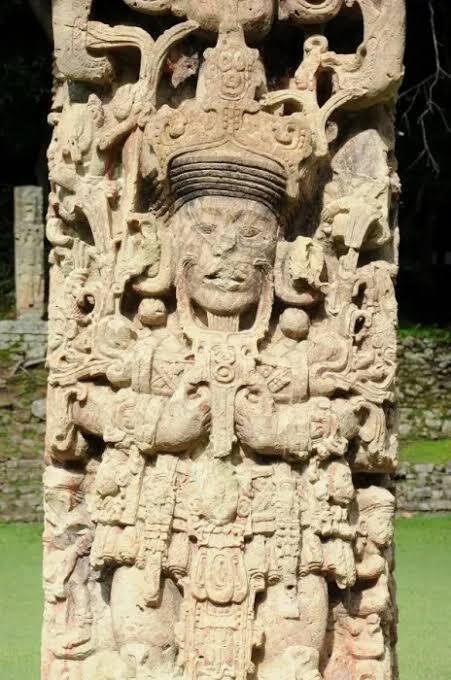
The Great Plaza is famous for its stunning stelae—towering stone monuments that chronicle the reigns of Copan’s kings. Wandering among these monoliths, I felt dwarfed by the imposing figures. Most of these magnificent sculptures were commissioned by the city’s 13th ruler, Uaxaclajuun Ub’aah K’awiil, commonly known as “18 Rabbit”.
18 Rabbit was a prolific builder and a patron of the arts, reigning during Copan’s golden age. Examining Stela A and Stela H closely, you can see the astonishingly deep relief carving. The figures wear elaborate headdresses adorned with macaw feathers, heavy jade belts, and expressions that feel remarkably alive.
The Hieroglyphic Stairway: The Longest Maya Text
Leaving the Great Plaza, I walked south toward what is arguably the crown jewel of Copan Central America: the Hieroglyphic Stairway. Covered by a protective canvas tarpaulin to shield it from acid rain and erosion, the stairway rises majestically up the side of Structure 26.
Spanning 63 steps and containing approximately 2,200 individual glyph blocks, this monument holds the longest known Maya text in existence. Commissioned by the 14th ruler and completed around 755 CE by the 15th ruler, Smoke Shell, the stairs narrate the dynastic history of the city.
Sitting on a stone bench opposite the stairway, I marveled at the sheer scale of the endeavor. It was fascinating to recall that when the Peabody Museum of Archaeology and Ethnology at Harvard University first began excavating the site in the 1890s, earthquakes had left the stairs in a jumbled ruin. Thanks to decades of painstaking research by epigraphers and institutions, roughly 80 percent of the text can now be read.
Descending into the Underworld: The Rosalila Tunnels
One of the most thrilling aspects of my visit to Copan Central America was the opportunity to venture beneath the surface. The ancient Maya continually built new temples directly over older ones. Archaeologists have excavated a vast network of tunnels beneath the Acropolis to study these buried structures.
Purchasing a separate ticket for the tunnels is absolutely essential. Stepping into the cool, dimly lit Túnel Rosalila, I was instantly transported to an underground labyrinth. The air felt thick and ancient. Eventually, the narrow passage opened up to reveal a section of the Rosalila Temple.
Finding a moment of pure reflection in these subterranean corridors reminded me of the profound stillness I experienced when gazing across Lake Kawaguchiko in Japan, where nature and history perfectly align to create a sense of deep inner peace. Seeing the original red stucco and intricate macaw masks preserved underground was a breathtaking reminder of the vibrant colors that once coated the entire ancient city.
The Copan Sculpture Museum
After spending hours exploring the ruins, I sought refuge from the midday heat inside the spectacular on-site Sculpture Museum. The entrance itself is an architectural marvel—you walk through a tunnel designed to resemble the open maw of a serpent, symbolically passing into the Mayan underworld.
Emerging into the sunlit central courtyard, I was immediately struck by the life-sized, brightly painted replica of the Rosalila Temple. Seeing the temple in its original crimson, jade, and gold glory completely shifted my perspective on Maya architecture. The museum also houses original altars, facades, and stelae that have been moved indoors for preservation, making it a crucial stop for anyone visiting Copan Central America.
Beyond the Ruins: Macaw Mountain and Copán Ruinas Town
The magic of Copan Central America extends far beyond the borders of the archaeological park. The adjacent town, Copán Ruinas, is a charming expanse of cobblestone streets, whitewashed colonial buildings, and excellent local coffee shops.
During my second day, I took a short mototaxi ride up into the hills to visit Macaw Mountain Bird Park and Nature Reserve. This incredible rescue and rehabilitation center cares for Honduran birds—especially the iconic Scarlet Macaw, the sacred bird of the ancient Copan rulers. Having one of these magnificent, brilliantly colored birds perch on my shoulder was an unforgettable highlight of my trip.
My Essential Travel Tips for Copan Central America
To ensure your journey is as smooth and enriching as mine, keep these practical tips in mind:
- Border Crossing: If you are traveling from Guatemala, the El Florido border crossing is generally straightforward. Ensure you have your passport ready and small bills in US Dollars or Lempiras for the entry fee.
- Hire a Guide: While wandering alone is atmospheric, hiring an English-speaking guide at the visitor center will dramatically enhance your understanding of the complex glyphs and history.
- Hydration and Footwear: The Honduran heat can be punishing by midday. Bring plenty of water, wear a hat, and use sturdy walking shoes suitable for uneven stone surfaces.
- Las Sepulturas: Your entrance ticket also grants access to Las Sepulturas, an ancient residential area located about a mile from the main ruins. It is highly worth the short walk to see where the elite nobles actually lived.
Final Thoughts on the Paris of the Maya World
Leaving Copan Central America, I felt a profound sense of awe. The intricately carved stones, the towering ceiba trees, and the vivid flash of scarlet macaws overhead combined to create an experience that felt both educational and deeply spiritual. Copan doesn’t just show you the history of a lost civilization; it allows you to feel the pulse of the artists, kings, and commoners who once walked its vibrant plazas.
If you crave a travel experience that challenges your intellect while rewarding your senses, this magnificent corner of Western Honduras deserves a top spot on your bucket list.
Early Putnam Era history of archaeological investigations at Copan
This brief archival presentation sheds light on the pioneering late-19th-century excavations at Copan, offering crucial historical context on how these magnificent ruins were initially studied.




One thought on “Copan Central America: My Complete Journey Through the Paris of the Ancient Maya”